
Planning a silent disco comes down to six decisions: the format, the headcount, the number of channels, the music, the venue rules and how headphones get onto heads and back again. Make them in roughly that order, starting about eight weeks out, and the night largely runs itself. This guide takes you from the first idea to the last headset clicked back into its case.
New to the whole idea? Start with our guide to what a silent disco is. Already sure you want one? You can rent silent disco headphones at any point in this process. Quotes are tailored to your event and we reply within 24 hours.
How to plan a silent disco: what should you decide first?
Decide the format first, because every other choice follows from it. A silent disco can be the whole event or one part of a longer evening.
- A full party, where everyone wears headphones from the first song to the last.
- An after hours section at a wedding or company dinner, starting when the speakers have to go off.
- A zone inside a festival or street event, running next to amplified stages.
- A listening or wellness session, where a host's voice and music share one channel.
Note the start time, the finish time and whether people will move between indoor and outdoor spaces. Those three details shape everything that follows. Organising for a company? Our team building silent disco ideas show how the format fits a work event.
How far ahead should you start planning?
Start around eight weeks out if you can, which leaves room to confirm the venue and book kit without rushing. Small private parties can come together faster, but popular weekends fill up. Here is a simple timeline to work from.
- Eight weeks out: fix the format, the venue and the date. Ask the venue about its sound rules.
- Six weeks out: estimate your headcount and request a quote.
- Four weeks out: book the DJ or start building playlists, and decide how many channels you want.
- Two weeks out: confirm delivery or pickup, plan the handout desk and brief your team.
- Event week: confirm final numbers, test the laptop, phone or mixer you will plug in, print a few signs.
- On the day: arrive with time to spare. The kit itself takes about 15 minutes to get running.
- After the last song: collect, count, box up and hand the kit over for collection or return it.
How many headphones do you need?
Plan for the number of people on the dancefloor at the busiest moment, which is not always every guest. When the silent disco is the main event, that number sits close to the full guest list. At a wedding or a festival zone, some people will be at the bar, outside or chatting, so your peak can be lower.
We include spare headsets at no extra cost, so a late arrival or a headset that needs swapping is covered. For worked examples with real guest counts, read how many silent disco headphones you need.
One, two or three channels?
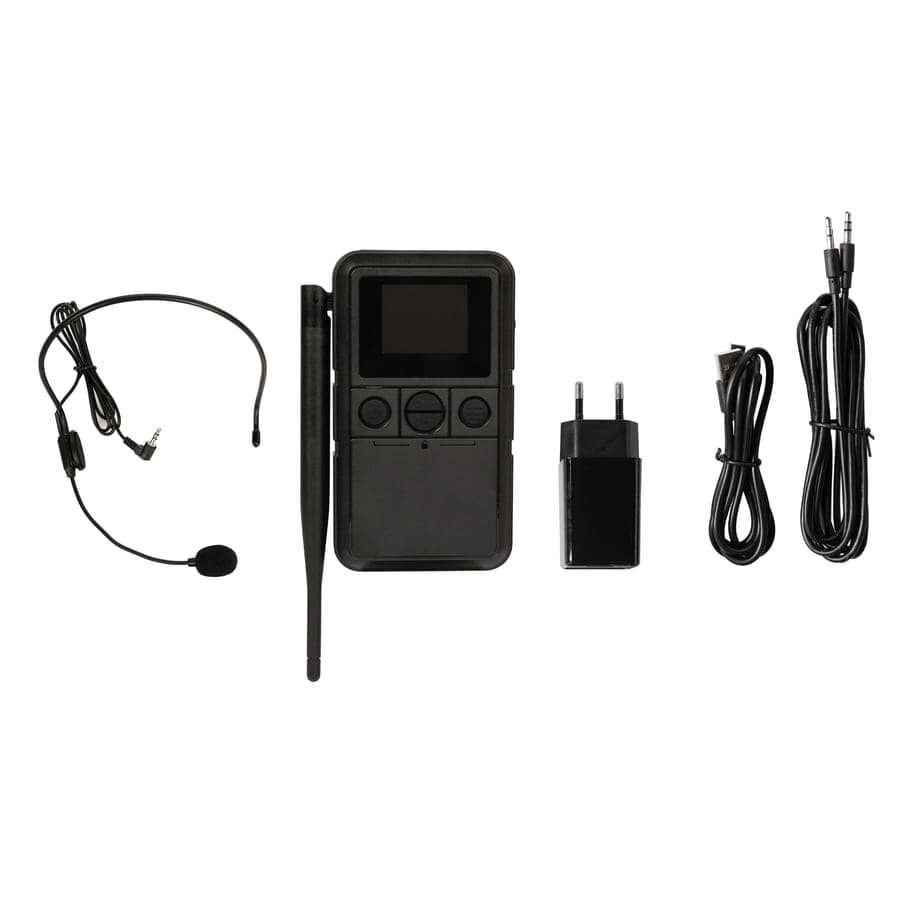
Choose channels by how much choice your crowd wants: one channel keeps everyone moving together, three lets people wander between moods. Each channel needs its own transmitter and its own music source, and any number of headsets can tune in to each one.
- One channel: a guided session, a single DJ set, a moment where the whole room should feel like one.
- Two channels: two DJs facing off, or a party channel next to a calmer one.
- Three channels: a wedding with several generations, three genres at a big party, or a quiet channel for people who want to talk.
Guests switch with a button on the ear cup, and a colour coded light shows which channel each person is on. From across the room you can read the crowd at a glance, which is half the fun when two DJs are competing.
Who plays the music?
A DJ or a playlist both work, as long as each channel has its own source. A laptop, phone or DJ mixer connects to the transmitter with an AUX or RCA cable, and some transmitters also take Bluetooth input from a phone or laptop. Bring your own DJ or ask us to arrange one.
Booking a DJ who has never played to headphones? Send them our silent disco DJ tips before the night. If you go with playlists, make them longer than you think you need and download them, so nothing depends on a phone signal. Planning speeches or a host? A wireless microphone sends a voice into every headset on the same channel as the music.
What should you check with the venue?
Ask about sound rules, set up space and power before anything else. With headphones there is no amplified sound in the room, which is why silent discos work in noise sensitive places and after curfew times. Every venue still has its own rules, and local requirements apply, so confirm them in writing. Our page on silent disco and noise rules gives the general picture.
- Where can the transmitter and DJ table go, close to a socket?
- Is there a table near the entrance for handing out headsets?
- What time must music stop, and does that rule cover headphones?
- If you are outside, is there cover for the kit if the weather turns?
Terraces, beaches and gardens bring their own questions about range, power and light. Our outdoor silent disco guide covers them one by one.
How does the kit arrive and leave?
Everything arrives ready to use: headsets, transmitters, charging cases and cables, cleaned, charged, boxed and labelled. Across Spain we arrange delivery, set up and collection for each event, or you can pick up from our base in Barcelona. If you would rather not touch anything technical, add an on site technician. For events outside Spain, our guide to silent disco rental in Europe explains how the kit travels by courier.
Each headset runs for about 8 hours on a charge, which covers most nights. For events over several days, plan an overnight charging slot for the cases.

How do you run handout and return?
Put a desk at the entrance with enough people for the arrival rush, and a clear return point at the exit. At the end, collect headsets as people leave rather than chasing them around the room.
Our guide to running the headphone handout and return covers desk layout, ways to keep track of headsets and counting the kit back. The quick start on the night is simple: power on the transmitter, then the headphones, set each headphone to the transmitter's channel and press play.
Frequently asked questions
How do I plan a silent disco?
Decide the format, estimate your peak headcount, choose one to three channels, sort the music source for each channel, confirm the venue's rules and plan how headsets are handed out and collected. Starting around eight weeks ahead gives you room for all of it.
How long does it take to set up a silent disco?
About 15 minutes for the kit itself. Power on the transmitter, then the headphones, match each headphone to the transmitter's channel and press play. Allow extra time to lay out the handout desk.
Do guests need an app or WiFi?
No. The headsets use radio frequency, not Bluetooth or WiFi, so there is no app to download and no venue internet needed.
Can I hold a silent disco outside Barcelona?
Yes. We arrange delivery, set up and collection for events across Spain, and kit also ships by courier to other European countries.
How much does a silent disco cost?
It depends on your headcount, dates and delivery, and there is no minimum order. Request a quote with your date and guest numbers and we reply within 24 hours with a price tailored to your event.