
The best silent disco team building ideas use wireless headphones with up to three channels to turn a group activity into something everyone can join at their own pace. They go well beyond a dancefloor: DJ battles between teams, a quiz played across channels, a guided walk, or an office party after hours that bothers nobody.
Below are ideas that work, with setups, timings and ways to keep quieter colleagues involved. For delivery, setup and the service itself, see our silent disco team building page. If the format is new to you, start with what a silent disco is.
Why does silent disco work for team building?
It gives everyone the same shared experience while letting each person decide how loud and how involved they want to be.
Every headset has its own volume control, and the channel button lets people move between energy levels. Nobody is pinned next to a speaker, and anyone can slip the headset off for a chat in a room that is otherwise quiet. There is something disarming about it too: a room full of colleagues singing along to a song nobody else can hear tends to break the ice faster than any icebreaker.
Which silent disco team building ideas work best?
The strongest ideas give teams something to do together, not just something to listen to.
DJ battle between teams
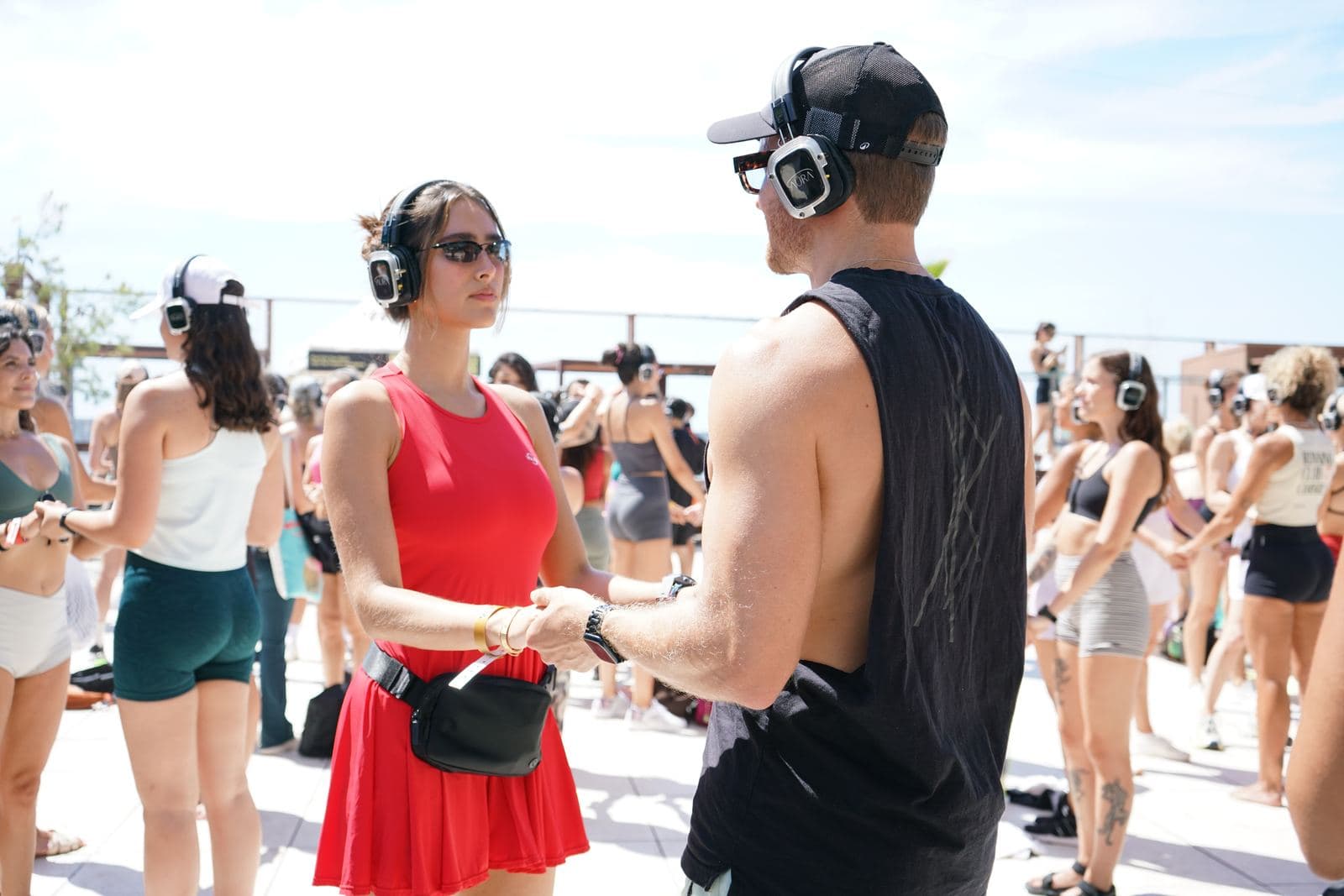
Split into two or three teams, one per channel. Each team builds a playlist or puts forward a volunteer DJ, and everyone else votes by switching channels. The colour coded light on every headset shows at a glance which team is winning the room, which makes for a loud finale in a silent space.
A silent quiz on channels
The quizmaster reads questions into a wireless microphone on one channel, while a second channel plays music rounds: song intros, film themes, the team's own office anthems. Teams write answers on paper, and the room stays calm enough to whisper tactics.
Choreography challenge
Give each team a track on its own channel and 20 minutes to build a short routine. Then each team performs while the audience takes off their headsets and watches people dance to music they cannot hear. It is ridiculous in the best way, and everyone remembers it.
Guided walk with a host
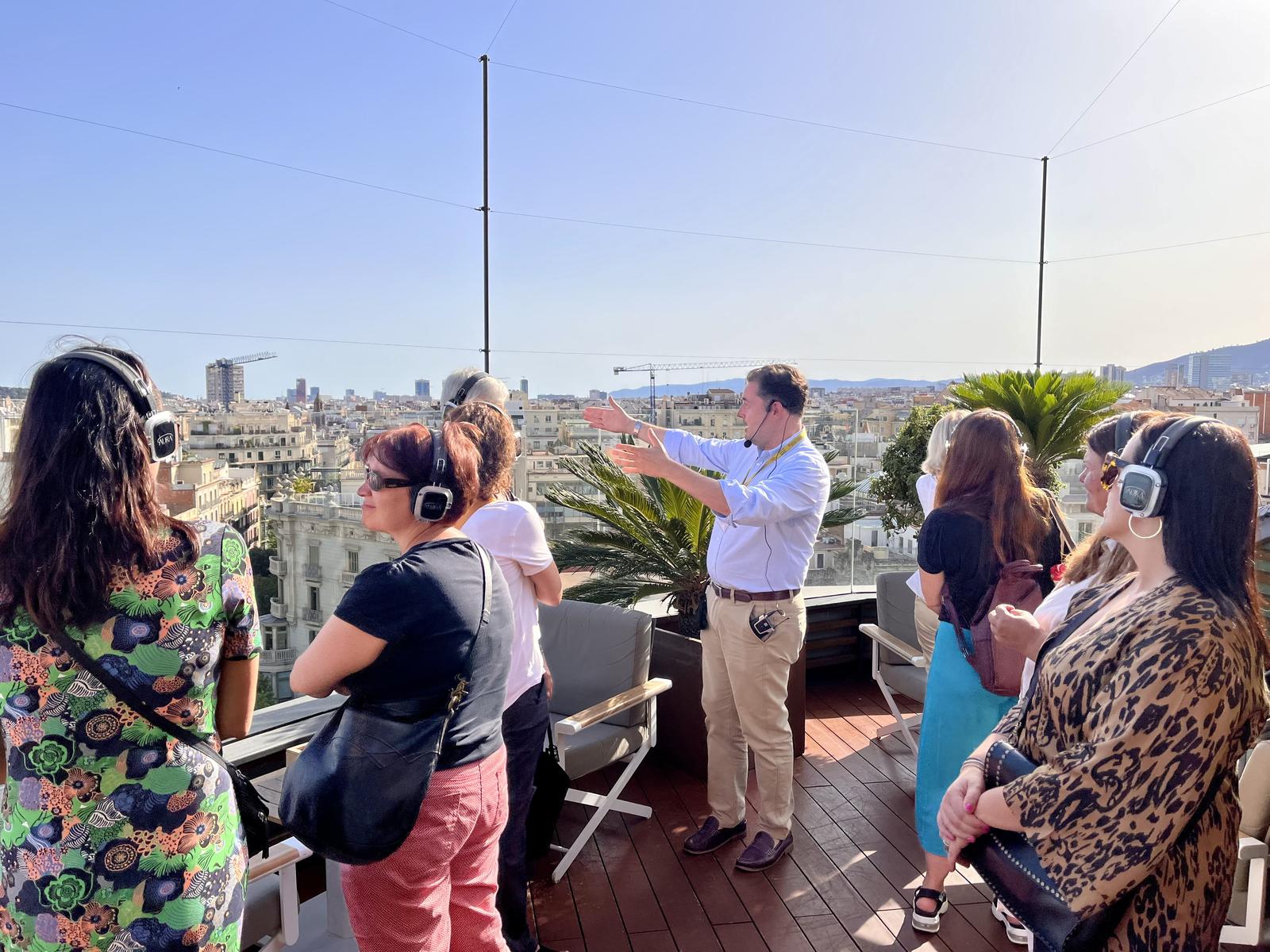
A host with a microphone leads the group through a neighbourhood, a park or the grounds of an offsite venue, mixing commentary with music. Range is up to 500 m outdoors with a clear line of sight, so the group can spread out a little without losing the host.
Office party after hours
Clear the desks, dim the lights and run a party in the office itself. With no amplified sound in the building, the evening can go on without disturbing other tenants or neighbours, though you should always confirm your building's rules first. Our page on silent disco and noise rules explains the basics.
A calm start to the day
Open an offsite with a short guided session: a stretching class or a guided meditation, with the instructor's voice and soft music in every ear. It sets a different tone from the usual welcome coffee, and it uses the same kit you will dance with later.
How do you set up channels for a team event?
Match each channel to a role: one for energy, one for the activity of the moment, and one kept calm.
- Office party for 20: a playlist on channel one, a colleague DJing on channel two, a quiet channel with low key music on channel three.
- Offsite for 80: a guided morning session on one channel with the instructor's microphone, a quiz in the afternoon with questions on one channel and music on another, and a DJ battle across all three in the evening.
- Company party for 300: three DJs, one per channel, plus a corner without headsets where people can simply talk.
For more on how people move between channels, read silent disco channels explained.
How do you make sure nobody sits it out?
Offer roles and quiet options, so joining in never has to mean dancing.
- Keep one channel calm, so people who would rather talk can stay in the room and still be part of it.
- Hand out roles: DJ, quizmaster, judge, voting counter, handout desk.
- Mix departments in each team, so the activity builds new connections, not old cliques.
- Keep rounds short, around 15 to 20 minutes, and alternate active and relaxed moments.
- Never make dancing the only option; the quiz and the walk work for everyone.
What do you need to organise?
Very little: a headcount, a source for each channel and a place to hand out and collect the headsets.
- Headsets: one per participant, with spares included at no extra cost and no minimum order.
- Sources: a laptop or phone for each channel, connected by AUX or RCA cable; some transmitters also accept Bluetooth input.
- A wireless microphone if a host, quizmaster or instructor will speak.
- A DJ if you want one: bring your own or we can arrange one.
- Venue rules checked in advance, especially for offices and shared buildings.
- A handout and return point by the entrance.
Full setup takes about 15 minutes, and each headset runs for about eight hours on a charge, enough for a whole day of activities. Request a quote with your date and team size and we reply with a price tailored to your event.
How does team building fit into a bigger company event?
Often as the social part of a larger programme, using the same headsets.
A day of talks can run on headphones in the morning, as shown in our conference headphones guide, and switch to a DJ battle in the evening. For launches, kickoffs and company parties, our guide to silent disco for corporate events covers the wider picture.
Frequently asked questions
Is silent disco team building good for people who do not like dancing?
Yes. The quiz, the guided walk and a calm channel let people join without dancing at all, and everyone controls their own volume. Roles like quizmaster or judge give quieter colleagues a part to play.
Can we do silent disco team building in the office?
Yes. With no amplified sound in the building, an office party on headphones keeps the noise inside everyone's ears. Check your building's own rules before you plan the evening.
How many people can join a silent disco team building?
Any size, from a small team to hundreds of people. One transmitter feeds any number of headsets, and there is no minimum order.
Do we need a DJ for a team building silent disco?
No. A playlist from a laptop or phone works perfectly. You can also bring your own DJ, put colleagues behind the decks, or ask us to arrange one.