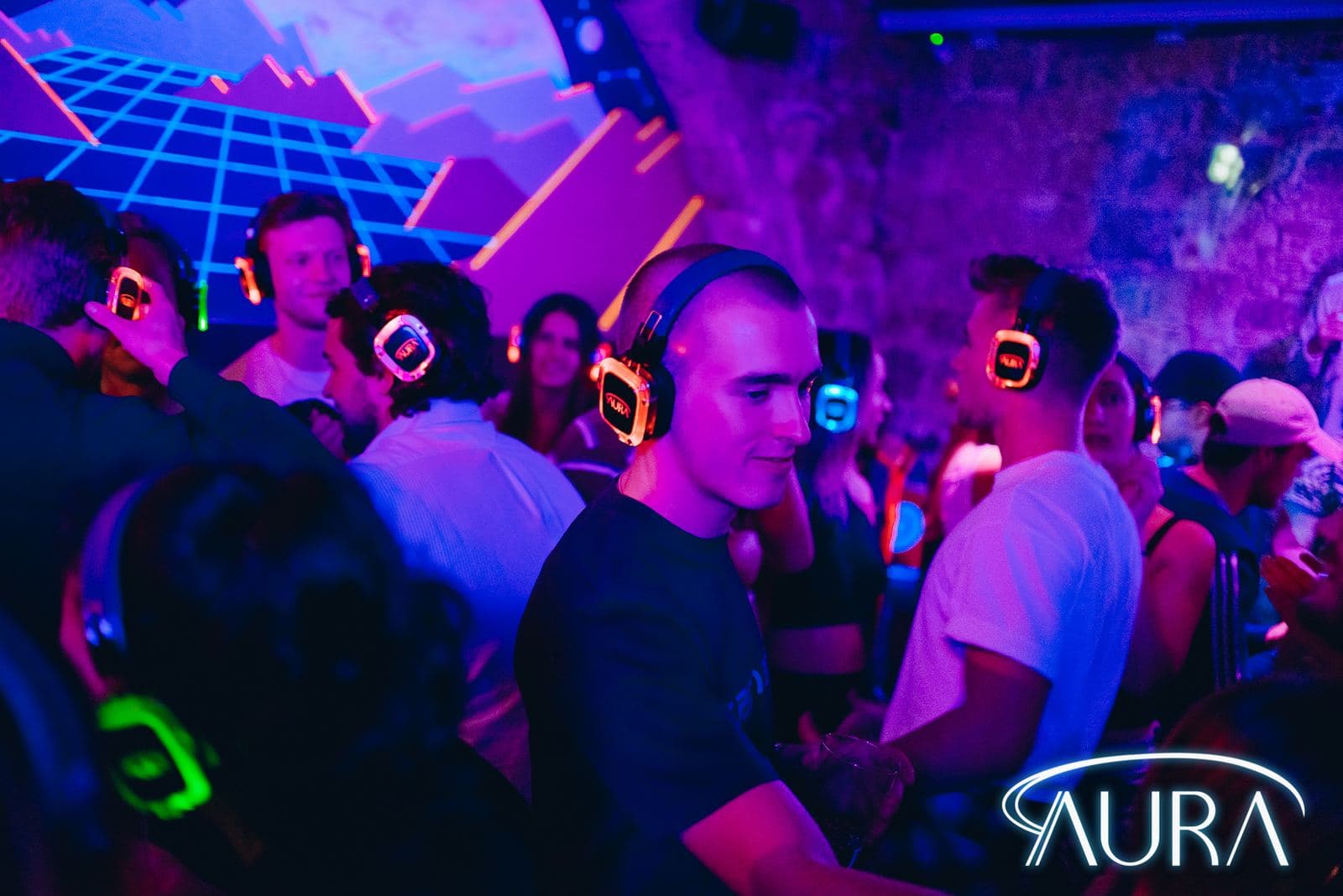
Silent disco channels are separate audio streams that run at the same time, each sent by its own transmitter. With AURA kit you can run up to three channels at once, and every guest picks one with a button on their headset. One channel suits a single shared experience, two create a choice or a battle, and three give you a full programme.
Channels are what make a silent disco more than just a party with headphones. This guide explains how they work, what each setup is good for, and how to plan a running order. For the bigger picture of transmitters, headsets and sources, see how a silent disco works.
What is a silent disco channel?
A channel is one transmitter broadcasting one source, such as a DJ, a playlist or a microphone. Any number of headsets can tune into it, so a channel can serve ten people or several hundred.
Each headset has a channel button on the ear cup and a colour coded light that shows which channel it is on. The colours depend on the headset model, so check them on the day rather than promising guests a specific colour in advance. What matters is that everyone, guests and organisers alike, can see the channel each person has chosen.
When is one channel enough?
One channel is right whenever everyone should hear the same thing. It is the simplest setup: one transmitter, one source, every headset on the same channel.
- A yoga class, meditation or sound bath led by one teacher.
- A guided walking tour, with the guide's voice and some background music.
- An outdoor film screening with a single soundtrack.
- A small birthday party with one playlist.
- A keynote talk in a noisy venue.
With a wireless microphone added, a host or teacher can speak into every headset on the same channel as the music, which is often all a wellness session or a tour needs.
What can you do with two channels?
Two channels give guests a choice, and choice changes the energy of a room. Half the crowd can be on one sound while the other half is somewhere else entirely.
The classic use is two DJs playing different styles: pop and throwbacks on one channel, house or techno on the other. Another favourite is a lively channel next to a calm one, so people who want to chat or rest are not stuck with the full party. At weddings, two channels are a simple way to please several generations at once, and our silent disco wedding ideas build on exactly that.
When do you need three channels?
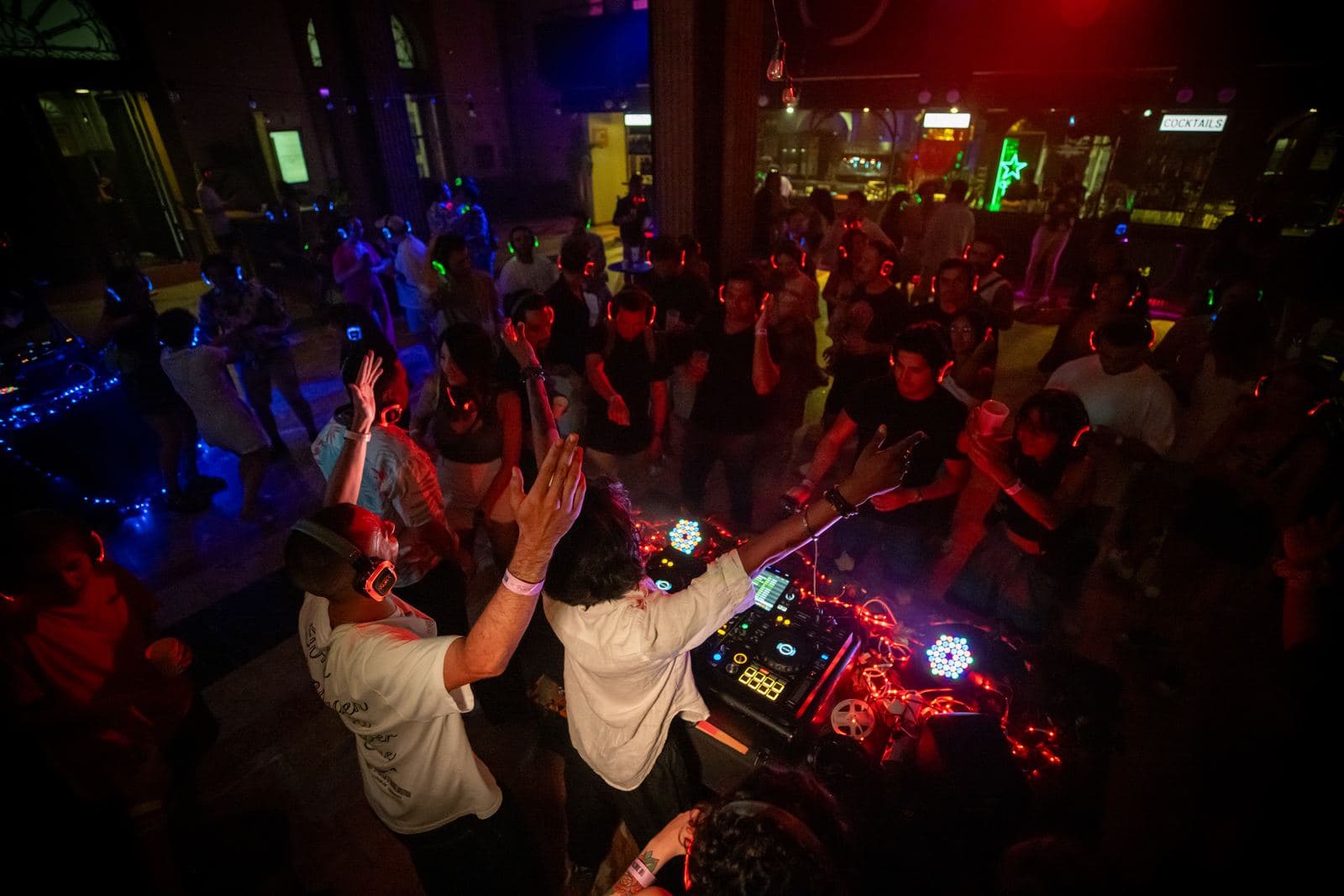
Three channels make sense when you want a full programme, a proper competition or several separate audiences in one space.
- A three way DJ battle, where each DJ plays to the colours on the floor.
- Two party channels plus one quiet channel for talking or resting.
- A conference running three talks side by side in one open hall, as described in our guide to conference headphones for breakout sessions.
- Live translation, with one language per channel, so delegates hear the speaker in their own language. See live translation for events. For the details, read our guide to live translation headphones for events.
- A festival stage with a different genre on each channel through the night. Our guide to running a silent disco festival stage shows how.
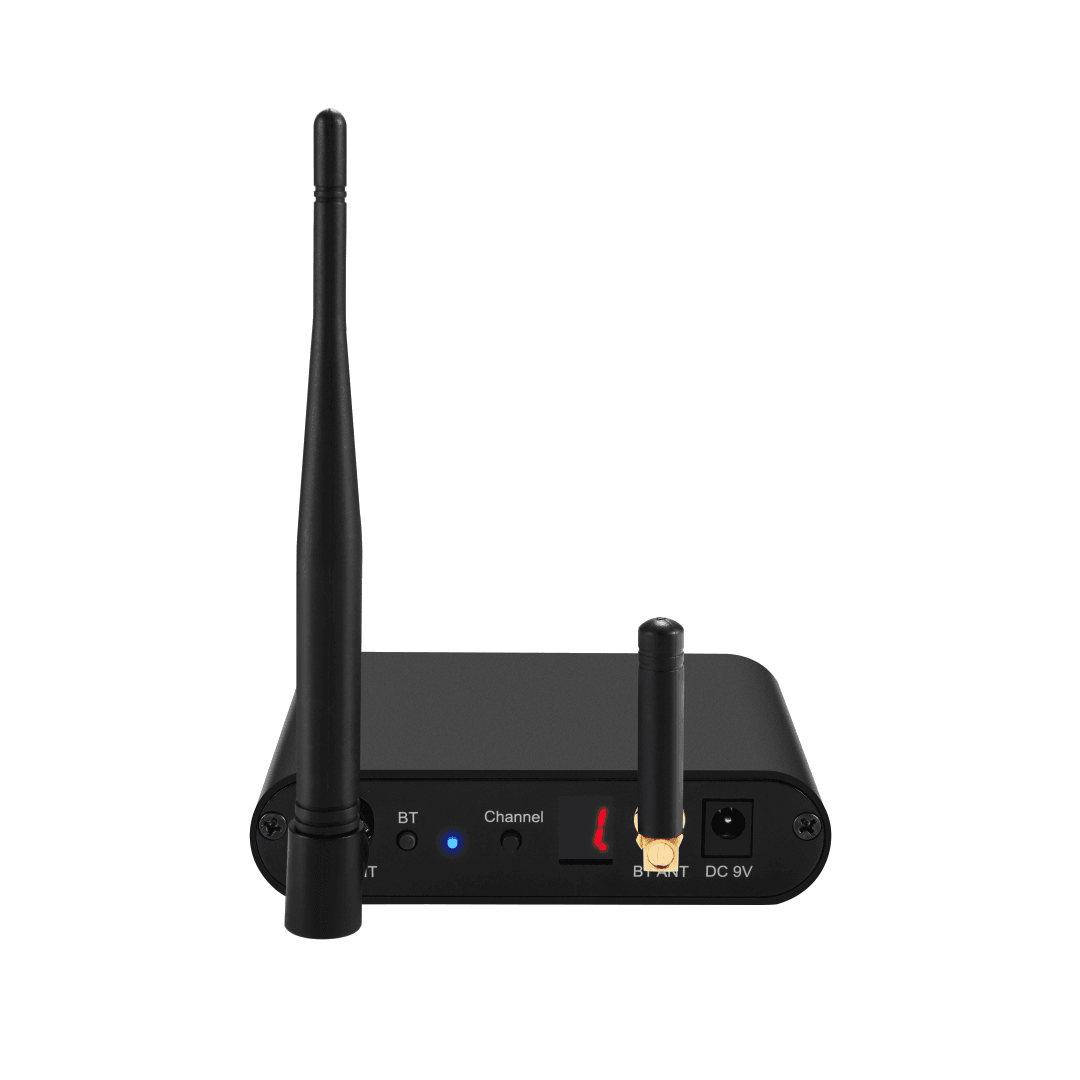
Each extra channel needs its own transmitter and its own source, so plan who or what feeds each one before the day.
How do guests switch channels?
Guests press the channel button on the ear cup, and the coloured light changes to the next channel. It takes a second and nobody needs instructions beyond a quick word at the headphone desk.
Before guests arrive, set every headset to the channel you want people to start on, usually the main party channel or the main talk. At a conference, a small sign at the desk showing which channel carries which room or language saves a lot of questions. At a party, let guests discover the channels themselves; it is part of the fun.
Example programmes for each setup
These running orders show how channels can shape an evening. Adapt the times to your own event.
Wedding, two channels
- After dinner: one channel with the first dance and classics everyone knows.
- Late evening: open the second channel, with current hits on one and decades favourites on the other.
- After the venue curfew: carry on with both channels while the space stays quiet.
Party with a DJ battle, three channels
- Warm up: one DJ on all guests' default channel while people arrive and collect headsets.
- Main set: three DJs, one per channel, each trying to win the most colours on the floor.
- Final hour: two DJs face off back to back, the third channel switches to a calm playlist for winding down.
Conference afternoon, three channels
- Plenary: the main speaker on one channel for everyone.
- Breakouts: three talks at once in different corners of the hall, one per channel.
- Networking: one channel with background music, the others switched off.
Tips for running silent disco channels well
Good channel planning is mostly about sound sources and communication. A few habits help:
- Label each transmitter with its channel and source so nobody plugs into the wrong one.
- Give each DJ a headset set to their own channel to monitor what the crowd hears. Our silent disco DJ tips go deeper.
- Keep levels similar across channels so switching does not blast anyone.
- Never leave a channel silent during a party: guests will think their headset is broken.
Frequently asked questions
How many channels can a silent disco have?
AURA kit runs up to three channels at once. Each channel needs its own transmitter and its own source.
How do you know which channel you are on?
A colour coded light on the headset shows the channel. The colours vary by headset model, so they are shown on the day.
Can each channel have a different language?
Yes. At multilingual events each channel can carry one language, from interpreters or AI translation, and delegates choose theirs with the channel button.
Do I need three channels for a silent disco?
No. One channel works for classes, tours and talks. Two or three add choice, DJ battles or separate sessions.