
A silent disco DJ plays exactly as usual, but the output goes into a transmitter instead of a PA, and the crowd hears the set through wireless headphones. The craft changes in three places: you monitor on a guest headset, you keep levels clean because there is no room sound to hide behind, and you read the dancefloor by the colour of the lights on people's heads. Get those right and the room is yours.
If you are new to the format, our guide to what a silent disco is covers the basics. Here we go straight to the booth. For the bigger picture on how we approach music events, see AURA for music and parties.
How do you connect a DJ setup to the transmitter?
Run a cable from your mixer or controller output into the transmitter, using RCA or a 3.5 mm AUX lead. The master output is the usual choice. If the venue also wants some sound in the room, a booth or second output can feed a small speaker while the master feeds the headphones.
Some transmitters also take Bluetooth input from a phone or laptop, which is handy for background playlists. For a live mix, a cable is the safer choice: one less thing to drop out halfway through a build. Bring a spare cable and a couple of adapters, because booths are full of surprises.
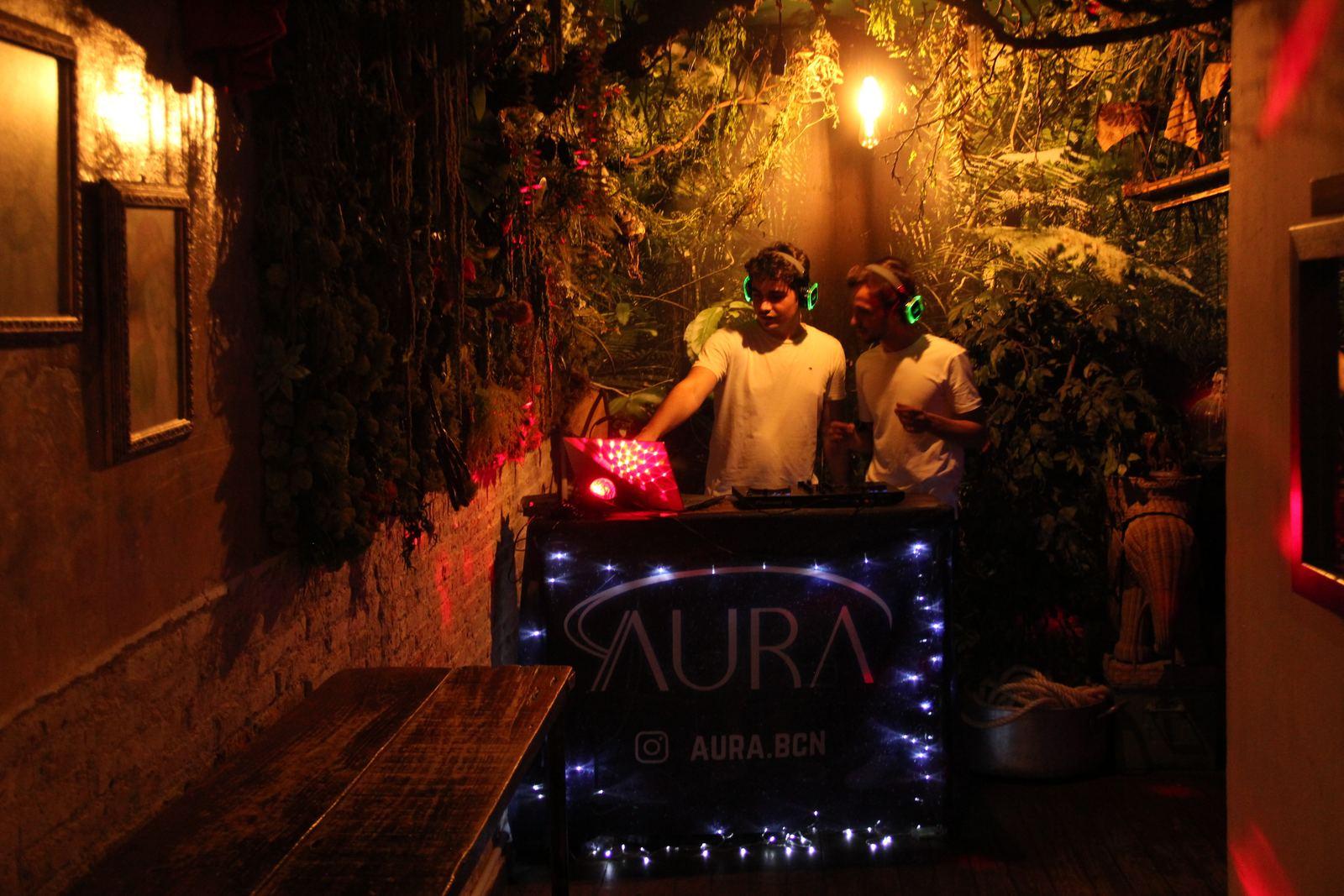
How should you monitor your mix?
Wear one of the guest headsets, set to your channel, for at least part of the night. Your own DJ headphones show you the cue, but only a guest headset tells you what the dancefloor is actually hearing after the transmitter.
A good routine: cue in your own headphones as usual, then switch to the guest headset after each transition to check the blend. Many DJs keep the guest headset round their neck and lift one ear cup when they need to check. Each headset has its own volume control, so set it to a comfortable middle level and leave it there as your reference.
How loud should your output be?
Keep your output strong and clean, never in the red. Guests control their own volume on the headset, so your job is not to make it loud; it is to make it consistent. Distortion in a speaker gets partly lost in the room. In headphones, it sits right against the eardrum and people notice straight away.
- Set your gain so the loudest tracks stay out of the red on your meters.
- Match levels between tracks more carefully than you would on a big system. A sudden jump makes people reach for the volume.
- Ease off heavy EQ boosts, especially in the low end.
- Do a level check with the transmitter before doors, not during the first track.
How is mixing for headphones different?
Headphones reveal detail, so every element of the track is closer and more personal. Vocals, hi hats and small production touches that disappear in a club come through clearly, which makes intros, breakdowns and acapellas hit harder than usual.
The other big difference is the singing. Guests hear the music, but nobody else in the room does, so a crowd belting out a chorus over near silence is one of the best sounds of the night. Lean into it with tracks people know the words to, and drop the music for a bar or two at the right moment. You will hear the room take over.

How do you read the LED colours?
Every headset shows a colour coded light for the channel it is on, so the dancefloor becomes a live scoreboard. Glance up between transitions and you can see whether your colour is spreading or shrinking.
Use it like you would read hands in the air. If your colour drops after a track, change direction quickly. If it grows, ride that energy a little longer. On multi DJ nights it also tells you when a rival channel is about to peak, so you can counter. Our article on silent disco channels explains how guests switch and what each setup is for.
How do you run a silent disco DJ battle?
Give each DJ their own channel and transmitter, agree some simple rules, and let the lights decide. Up to three channels can run at once, so a battle can be two or three DJs.
- Agree a theme for each round: decades, guilty pleasures, one genre each, crowd requests.
- Set round lengths so the energy keeps moving.
- Have a host with a wireless microphone call the rounds on every channel.
- Let the colours on the dancefloor pick each winner.
- Finish with all DJs on the same track, so the whole room ends together.
What should you play on each channel?
Give each channel a clear identity so guests know what they are switching to. Contrast works better than three versions of the same thing. Playing at a festival? Our guide to the silent disco festival stage shows how channels work there.
- Big parties: current club sounds on one channel, throwbacks on another, a wildcard genre on the third.
- Weddings: one channel for the older guests, one for the dancefloor regulars, one for singalong classics.
- Company events: upbeat crowd pleasers on one channel and a calmer lounge channel for people who want to chat.
- Live sets: one channel can carry a band while a DJ plays the other. Our guide to the silent concert covers feeding a live mix.
If you are the organiser rather than the DJ, our silent disco planning guide shows where the DJ fits into the full timeline.
Frequently asked questions
How does a DJ connect to a silent disco?
The mixer or controller output goes into the transmitter with an RCA or 3.5 mm AUX cable. The transmitter then broadcasts the set to every headset on its channel.
Can two DJs play a silent disco at the same time?
Yes. Each DJ gets their own channel and transmitter, and guests switch between them with a button on the headset. Up to three channels can run at once.
Do I need special DJ equipment for a silent disco?
No. Any standard mixer, controller, laptop or phone with an AUX or RCA output works. Bring a spare cable and adapters.
How do I know what the crowd hears?
Wear one of the guest headsets set to your channel. It plays exactly what the dancefloor hears after the transmitter.