
How does a silent concert work? The audience at a live performance listens through wireless headphones instead of a PA. The sound engineer sends a mix from the desk to a transmitter, and every headset receives it live, so the crowd hears the band close and clear while the space around stays quiet enough for neighbours, curfews and venues that never host amplified music.
It opens doors for promoters, venues and musicians alike. Our page on silent concert headphones covers the kit and production support. This guide explains how the sound gets from stage to ear, what to expect from it, and which shows suit the format.
How does a silent concert work, from stage to headset?
Through a cable from the mixing desk to the transmitter. Everything before the desk works exactly as at a normal gig.
- Mic and line the instruments as usual into the desk.
- Take a spare output from the desk, such as an auxiliary send, a matrix or a record output, and connect it to the transmitter with an RCA or AUX (3.5 mm) cable.
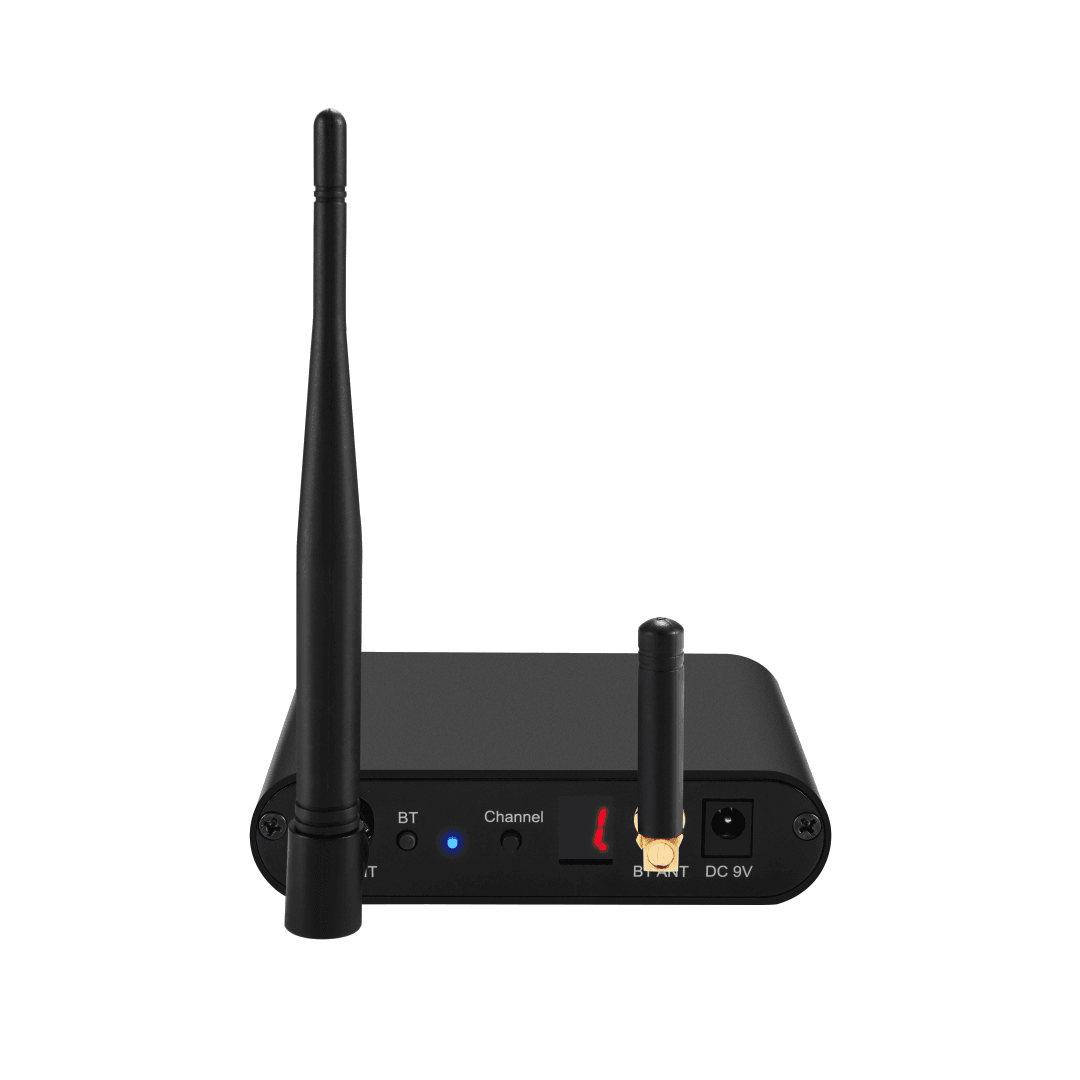
- Switch on the transmitter, then the headphones, and set the headsets to its channel. A colour coded light on each ear cup shows which channel is selected.
- Build a mix for that output while listening on one of the audience headsets, not on studio headphones, so you hear what the crowd will hear.
- Keep a headset at the desk throughout the show and check it between songs.
For a solo act without a desk, a laptop, a stage piano or a small mixer can feed the transmitter directly. The headsets receive the broadcast live, so the audience hears the music in time with what they see on stage.
What should you expect from the sound?
Close, clean and detailed, and only as good as the mix you send. Set expectations honestly with artists and audience.
- The headphones carry exactly what the desk sends. A careful mix sounds intimate and balanced; a rushed one sounds thin.
- There is no room sound in the headsets: no echo, no muddy back corner, no bass rattling the walls. Some engineers add a touch of reverb to keep it alive.
- The headphones are not designed to reproduce the physical punch of a big PA. The experience is closer to a great live recording than to standing in front of a stack.
- Each listener controls their own volume, which audiences love and which keeps the mix comfortable for long sets.

Which acts suit a silent concert?
Acts whose instruments are quiet in the room or go straight into the desk.
Acoustic drums, brass and loud guitar amps make real sound in the room whatever you do with the headphones, so a full rock band is not silent, only quieter. These setups work best:
- Electronic live sets, synths and drum machines, which go straight into the desk and make no sound of their own.
- Singer songwriters, duos and small acoustic groups, where the headphones bring every listener into the front row.
- Bands with electronic drums, keyboards and guitars through amp modellers.
- Classical and jazz players in large or echoey spaces, where headphones give clarity at the back of the hall.
- Hybrid nights with a DJ between live sets. Our guide to silent disco DJs covers connecting and monitoring for the DJ side.
Can you run two stages or two acts at once?
Yes. With up to three channels, each with its own transmitter, two or three performances can run in one space and listeners switch between them.
Ideas that work: two acts playing alternate songs, a band on one channel and a DJ on another, or a live set on one channel with the artist's commentary or a translated introduction on a second. Any number of headsets can listen to each transmitter, so the crowd can split however it likes. Our explainer on silent disco channels shows how switching and the coloured lights work.
Where can you put on a silent concert?
In places that would never accept a PA, and at hours when a PA would have to stop.
- Rooftops and hotel terraces with residents nearby.
- Galleries, museums and heritage spaces, where amplified sound is not an option. See our guide to silent disco in museums and galleries.
- Courtyards, cloisters, libraries and gardens.
- Late sets at festivals after the main stages have stopped.
- Unusual spaces such as shops, offices or boats, where a speaker system would never fit.
Outdoors, the headsets reach up to about 500 m from the transmitter with a clear line of sight. Walls and dense crowds shorten that, so place the transmitter high and in view of the audience. Headphones remove amplified sound, but always confirm the venue's rules and local requirements; our page on silent disco noise rules explains what to check.
How do the musicians hear themselves?
With their usual monitoring, kept as quiet as possible. In a silent setup, wedge monitors can leak into the room, so in ear monitors suit the format best. Alternatively, musicians can wear one of the audience headsets to hear the broadcast mix, which many acoustic players find surprisingly comfortable.
What does a silent concert need on the night?
- One headset per audience member. Spare headsets are included at no extra cost.
- A handout desk at the entrance, and a short note on volume and channels before the first song.
- A soundcheck on the headsets, not just on the wedges.
- A return point at the exit, staffed so headsets are counted back in.
- Battery is rarely an issue: each headset runs for about 8 hours on a charge.
There is no minimum order, and we can add an on site technician or arrange a DJ for the night: request a quote with your date and audience size and we reply with a price. For venues running concerts every week, owning NAH25 headsets is often the better choice. If the whole format is new to your audience, our guide to what a silent disco is is a good link to share.
Frequently asked questions
Is there a delay between the stage and the headphones?
The performance is broadcast live over radio frequency to every headset, so the audience hears it in time with what they see on stage.
Can the audience hear the band without headphones?
It depends on the instruments. Electronic instruments and anything going straight into the desk are silent in the room. Acoustic drums, brass and amplified guitars still make sound, just less of it without a PA.
What cable do we need to connect our mixing desk?
An RCA or AUX (3.5 mm) cable from a spare output on the desk into the transmitter. Tell us about your desk when you request a quote and we will check the connection with you.
Can a silent concert run after a venue's noise curfew?
Headphones remove amplified sound, which is why silent formats often work later than normal gigs. Always confirm the venue's own rules and local requirements before you plan the timing.