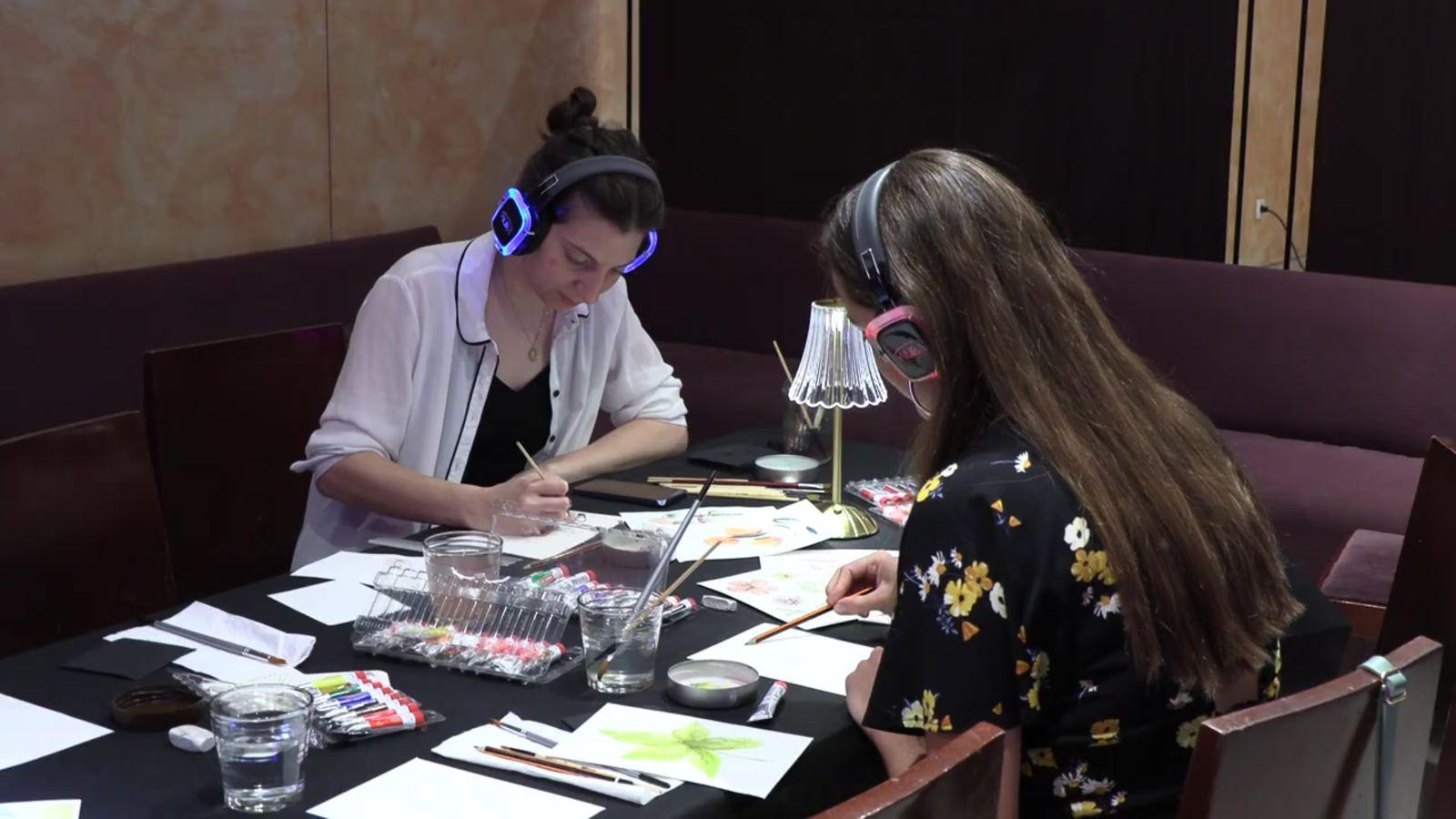
Silent disco in museums and galleries puts music and spoken word into wireless headphones instead of speakers, so the space can host a night of sound without amplified audio filling rooms full of art. Visitors dance, listen or wander between works with the soundtrack in their ears, while the rooms themselves stay quiet.
For art spaces that is far more than a novelty. It opens the door to late openings, curated listening and guided visits in places where speakers would never be welcome. It is also a format close to our hearts, and our page on experience events shows the kind of evenings we produce.
Why do headphones suit art spaces?
Because the sound stays with the listener and never fills the room.
There are no speaker stacks to place between the works, no bass travelling through walls and display cases, and no sound drifting into rooms that are meant to stay calm. Galleries next to homes, offices or other venues can host an evening without anyone outside hearing it. Each visitor controls their own volume, so the experience is as loud or as gentle as they want.
Headphones do not change the venue's own rules, though. Capacity, food and drink, where people may stand and how close they may get to the works are always the venue's call, so agree those first.
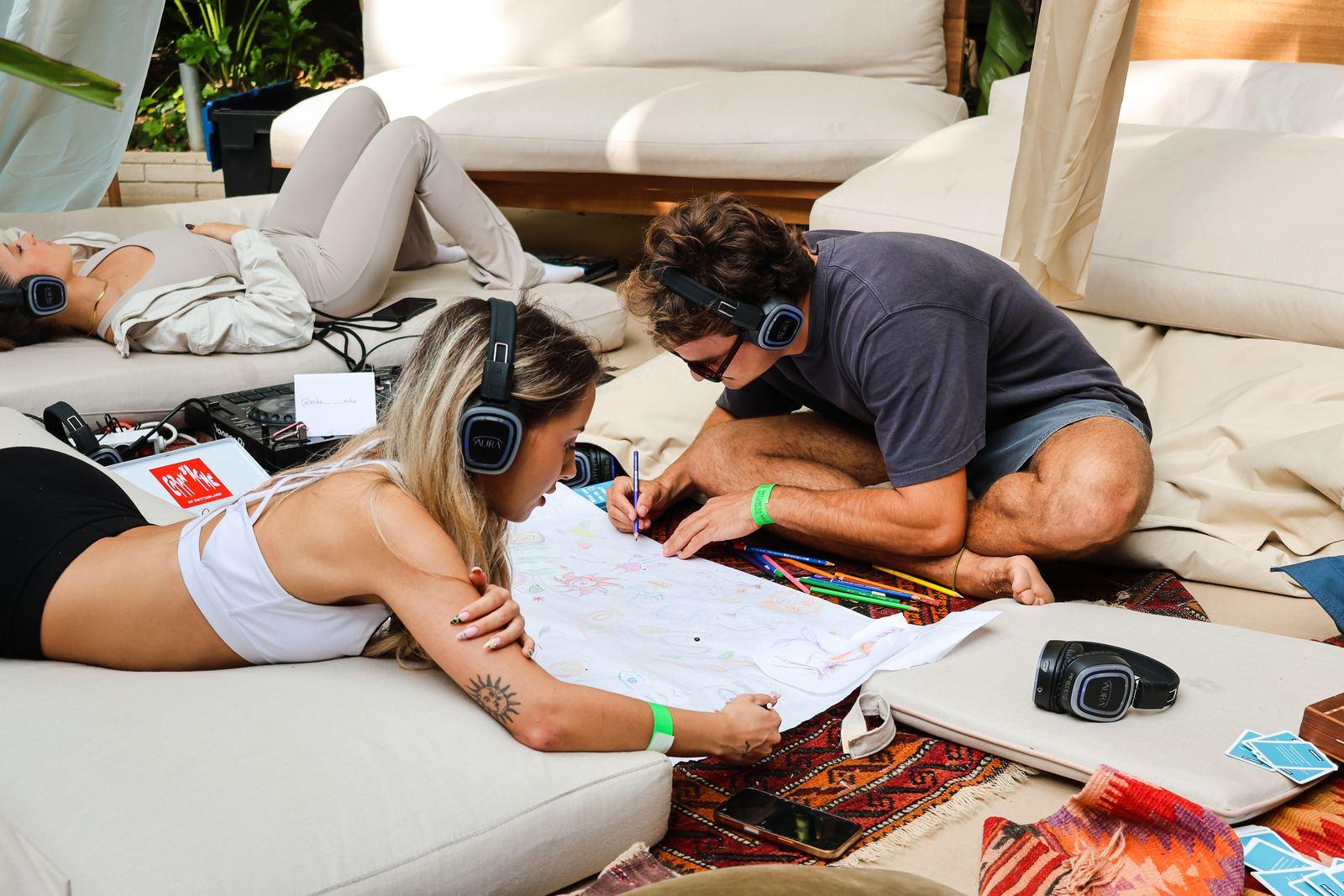
Which silent disco formats work in museums and galleries?
Five formats suit art spaces especially well, from a full late night party to a single calm listening session.
A late opening with a DJ
Keep the doors open after hours and put a DJ on one channel. People move between the dance space and the galleries, headsets on, and the evening has the energy of a club without a club's volume.
Curated listening
A curator, artist or musician builds a soundtrack for the exhibition: a playlist, an ambient set or a spoken piece. Visitors walk the rooms with it in their ears, and the art and sound start talking to each other.
Guided visits with a voice in every ear
A guide speaks into a wireless microphone and the whole group hears every word without the guide raising their voice. It is the same idea we cover in our guide to silent walking tours, brought indoors.
Live music among the works
An acoustic set or a small live act can feed the transmitter through a mixer, so the performance reaches every headset without amplifying it into the room. Our article on the silent concert explains the setup.
Calm sessions in the galleries
A guided meditation or slow listening session in front of a single work can be one of the most memorable things a museum offers. For ideas, read our guide to guided meditation with headphones.
How do you choose channels for an art event?
Up to three channels run at once, so give each one a clear purpose.
- A DJ for the main room on one channel, an ambient set for people moving through the galleries on another, and the curator's voice talking about the works on the third.
- A curator's talk in two or three languages, one language per channel, each with its own guide.
- Two artists or musicians responding to the same space, with visitors switching between them to compare.
Range is up to 500 m outdoors with a clear line of sight. Indoors, thick walls and crowds reduce it, so in buildings with many rooms, walk the route with a test headset before the night and place the transmitters where the signal reaches the spaces you plan to use.
What is The Gallery by Aura Music?
It is our own format: a curated music and art event with headsets.
We mention it because it is exactly the kind of evening this guide is about: art in the space, music in the headphones, and people free to choose how they take in both. If you run a gallery, museum or heritage space and would like to host an evening along these lines, we produce events as well as supplying the kit, so talk to us.
How do you plan a silent disco in a gallery or museum?
Start with the venue's rules, then build the format and the logistics around them.
- Agree with the venue on capacity, open rooms, food and drink, and any rules for protecting the works.
- Choose the format and decide what each channel will carry.
- Arrange a source for each channel: a DJ setup, a laptop, a phone or a microphone, connected by AUX or RCA cable.
- Plan where dancing happens: give it a room with space, away from fragile pieces.
- Set up the handout point near the entrance or cloakroom, with headsets already charged.
- Put a member of staff in each open room to help visitors and watch the flow.
- Collect the headsets at the exit as people leave.
Plan one headset per visitor at your busiest moment, with spares included at no extra cost. Each headset runs for about eight hours on a charge, which covers even a long night. There is no minimum order: request a quote with your date and expected visitor numbers and we reply with a price tailored to your event.
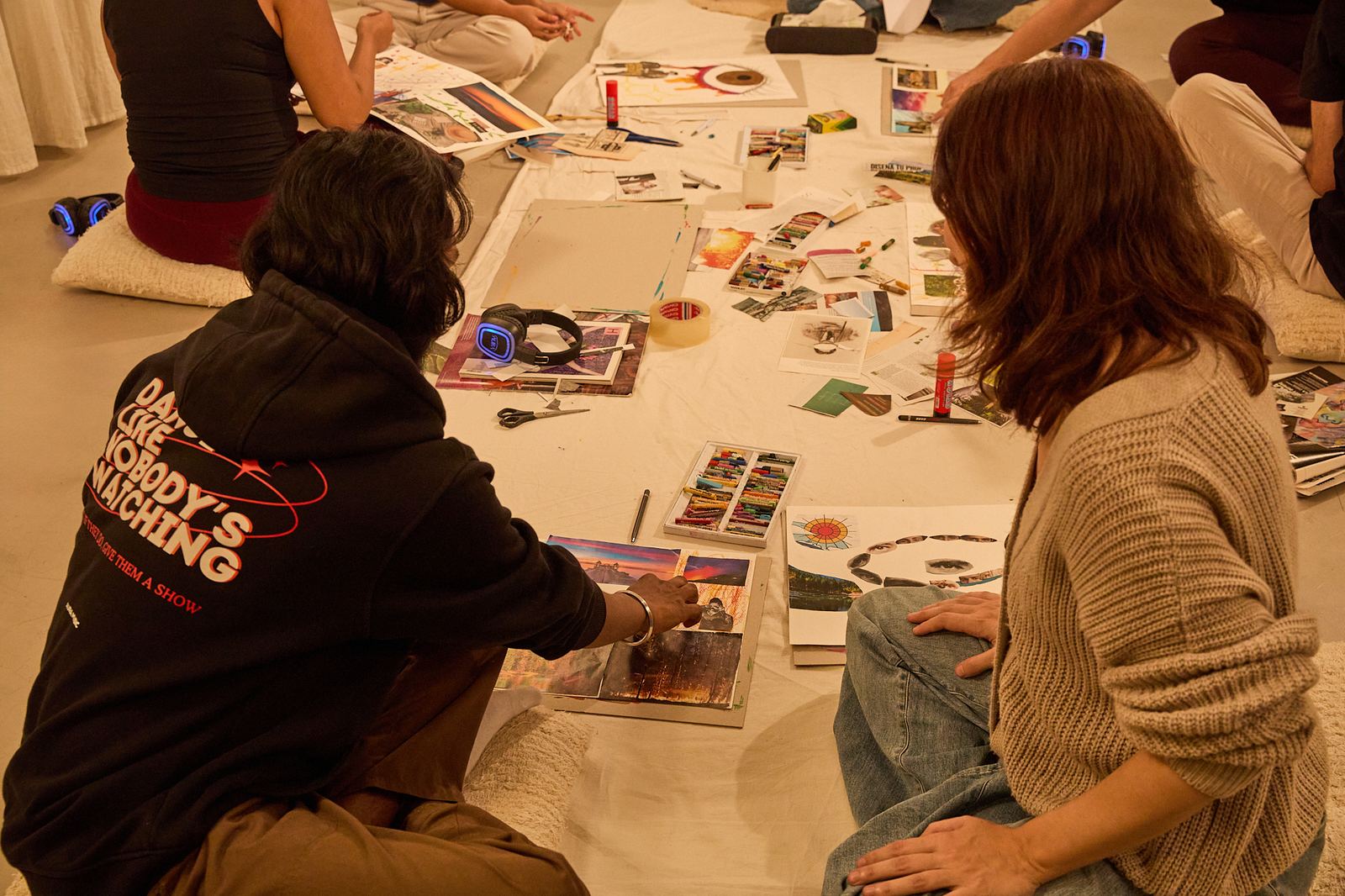
What do visitors need to know on the night?
Very little, as long as someone tells them at the door.
- How to switch channel: press the button on the ear cup until the colour coded light shows the channel they want.
- How to set the volume on their own headset.
- That they can lift the headset off to talk, then put it back on.
- Where dancing is welcome and where to move gently.
- Where to return the headset on the way out.
If the format is new to your team, our explainer on what a silent disco is is a good place to start.
Frequently asked questions
Can you hold a silent disco in a museum?
Yes, as long as the museum agrees and you follow its rules on capacity, food and drink and access to the works. The music runs through wireless headphones, so no speakers go into the rooms.
Will a silent disco in a gallery disturb other rooms or neighbours?
There is no amplified sound in the space, so the music does not carry into other rooms or outside. People still talk, laugh and sometimes sing along, so the room is quiet rather than silent.
Can a guide talk to a group in a museum through the headphones?
Yes. The guide speaks into a wireless microphone connected to a transmitter, and everyone on that channel hears them clearly without the guide raising their voice.
Do visitors need their phones or an app?
No. The headsets work on radio frequency, so visitors just put them on, choose a channel and set the volume.