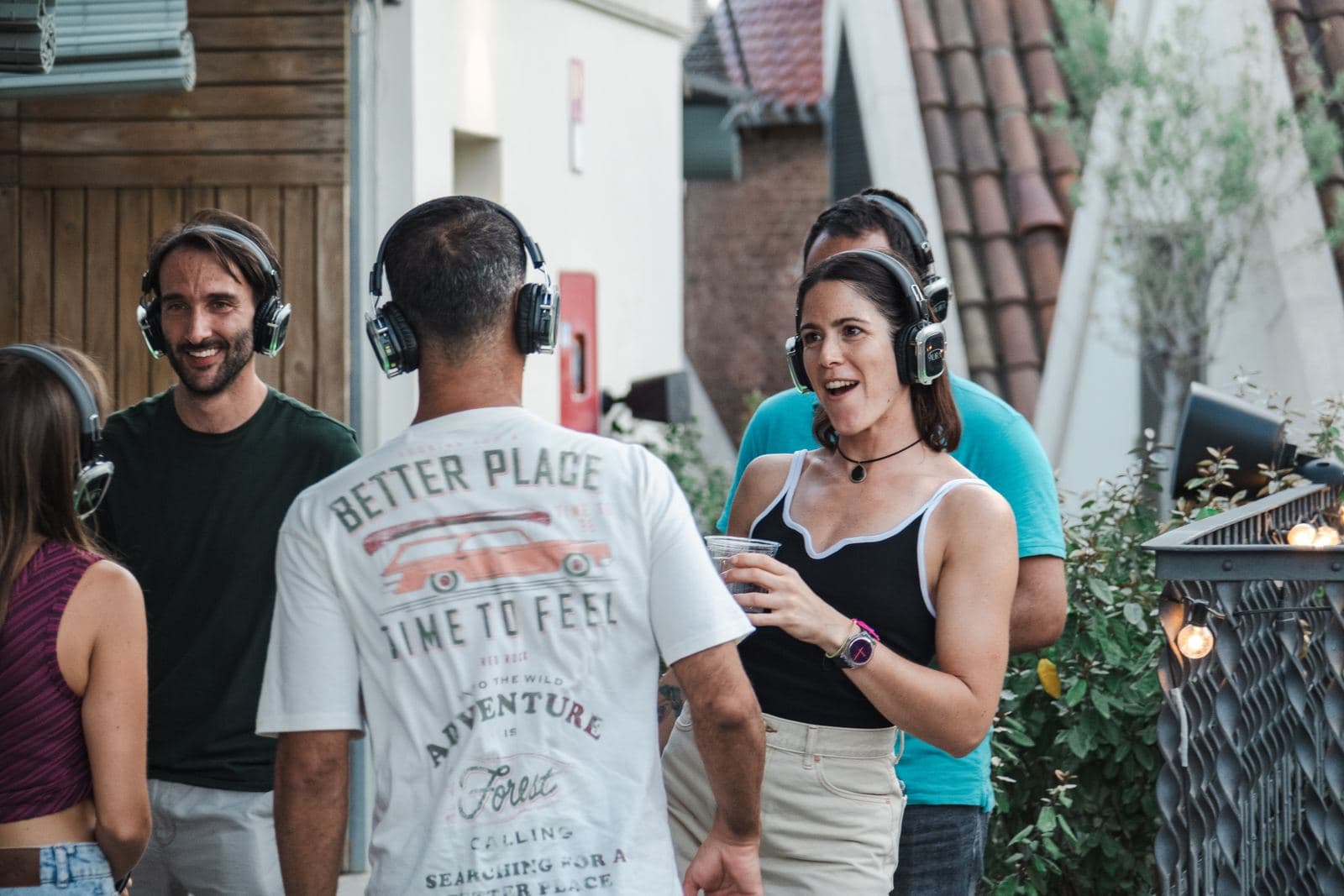
How does a silent cinema work? The audience hears the soundtrack through wireless headphones instead of speakers: the audio travels from the laptop or projector to a transmitter and out to every headset, so the dialogue stays crisp in a park, on a rooftop or in a courtyard, and the people living around it hear nothing at all.
It turns almost any open space into a cinema for the night. Our silent cinema headphone rental page covers the kit. This guide covers the practical side: wiring the sound, choosing a spot, using the channels and running the evening.
Why screen a film on headphones?
Because outdoor sound is the hardest part of an open air screening, and headphones remove the problem instead of fighting it.
- Every seat is a good seat. The back row hears the whispered line as clearly as the front row, with no speakers to sit too close to or too far from.
- Wind, traffic and passing crowds stop competing with the dialogue.
- Late screenings become possible. With no amplified sound in the space, a film can start when it is properly dark, even in summer.
- Venues say yes more easily. Hotel terraces, gardens and residential courtyards that could never take a speaker system can host a film night.
- Each viewer sets their own volume, so nobody has to choose between deafening and inaudible.
Always confirm your venue's own rules on events and late activity. Our page on silent disco and noise rules explains why headphones help and what to check.
How does a silent cinema work on the technical side?
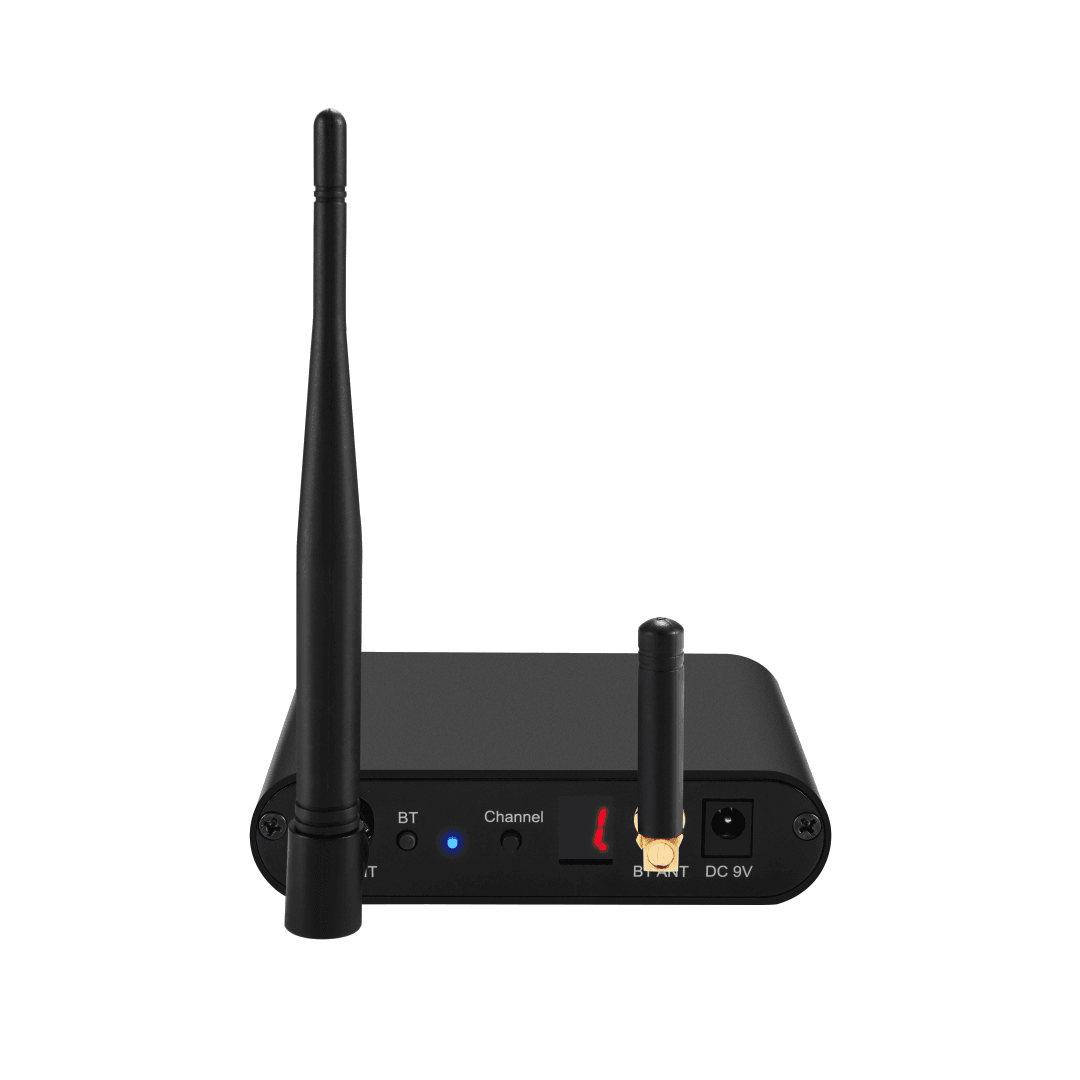
You take the audio output from whatever plays the film and plug it into the transmitter with a cable.
- Play the film from a laptop, media player or projector with an audio output.
- Connect that output to the transmitter with an AUX (3.5 mm) or RCA cable. Some transmitters also accept Bluetooth from a laptop, but for a full feature a cable is the simplest and most dependable link.
- Switch on the transmitter, then the headphones, and set the headsets to the transmitter's channel. A colour coded light on each ear cup shows the channel.
- Test with two scenes: a quiet dialogue scene and a loud music or action scene. Set the source volume so neither feels too weak or too harsh in the headset.
- Turn off any speaker built into the projector, so the only sound is in the headphones.
The headsets receive the broadcast live, so everyone hears the film together, in time with the picture. Full setup takes about 15 minutes once the screen and projector are in place.

Can you show two languages or two films at once?
Yes. With up to three channels, each with its own transmitter, viewers choose what they hear with one button on the headset.
- Original and dubbed versions: the original soundtrack on one channel and the Spanish version on another, so a mixed audience watches the same screen together.
- Two screens, one lawn: two films side by side, each on its own channel, so families and film fans share the space.
- A pre show channel: music or a short introduction while people settle, then everyone switches to the film channel when the lights go down.
Our guide to silent disco channels explains how switching works and how the light on each headset shows the channel.
Where does silent cinema work best?
Anywhere with a flat surface for a screen, space to sit and a reason to keep the noise down.
- Rooftops and hotel terraces with residents or guests sleeping nearby.
- Gardens, courtyards and cloisters where sound would bounce off the walls.
- Parks and beaches, subject to permission from the council or the venue.
- Campsites and festivals, as a late night option after the main stages have stopped.
- Office terraces and company events, as a relaxed alternative to an after work drink.
Outdoors, the headsets reach up to about 500 m with a clear line of sight, which is far more than any screening area needs. Place the transmitter near the projector with an open view of the audience, away from walls and metal structures. Our guide to outdoor silent disco covers weather, power and placement in more depth. Indoor heritage spaces work too: our guide to silent disco in museums and galleries covers art venues, and the same headsets carry the guide's voice on silent walking tours.
How long can a screening run?
Comfortably through a double bill. Each headset runs for about 8 hours on a charge, so a pre show, a feature, an interval and a second film all fit without recharging. If you screen several nights in a row, the headsets go back into their charging cases between evenings. Our article on battery life and range explains what to expect in practice.
What should be on your screening checklist?
Most problems at a silent cinema come from logistics, not sound.
- Permission to show the film in public, confirmed before you sell a single ticket.
- Headset numbers: one per viewer. We include spare headsets at no extra cost.
- A handout desk at the entrance with enough light to see, placed so latecomers do not walk in front of the screen.
- Seating, cushions or blankets, plus a plan if the evening turns cold.
- A short spoken welcome on the headphones before the film: how to change volume and channel, and where to return the headset.
- A return point at the exit, with someone counting headsets back into their cases.
Should a regular film club rent or buy?
Rent for one off screenings and summer seasons. Buy if you run screenings every week. A rental arrives cleaned, charged, boxed and labelled, with transmitters and charging cases, and there is no minimum order: request a quote with your screening dates and audience size and we reply with a price. For a permanent rooftop cinema, owning NAH25 headsets with your logo printed on them is often the better long term choice. New to headphone events? Our explainer on what a silent disco is is a good place to start.
Frequently asked questions
Is the sound in sync with the picture at a silent cinema?
Yes. The film's audio is broadcast live over radio frequency to every headset, so all viewers hear it together and in time with the screen.
Can we run a silent cinema in a public park?
Headphones mean no amplified sound in the park, which removes the main objection to film nights. You still need permission from the council or the park for the event itself, so check local requirements early.
Can we offer a film in two languages?
Yes. Put the original soundtrack on one channel and a dubbed version on another, each from its own source and transmitter, and every viewer picks their language on the headset.
Do viewers need their own phone or headphones?
No. Each viewer receives a wireless headset at the door. There is no app, no WiFi and nothing to pair.